The Fine Print of Loving Things: Contracts for a Mug, a Chair, and a Fern on Borrowed Time
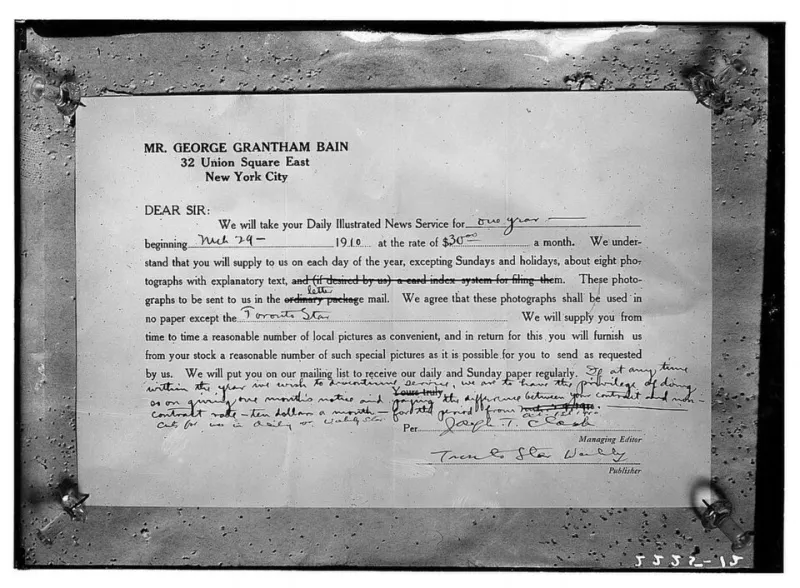
Photo: The Library of Congress, No restrictions, via Wikimedia Commons
It started, as most of my problems do, with a Tuesday and a chipped mug.
The mug — ceramic, oatmeal-colored, purchased in 2016 from a gas station outside Flagstaff for reasons I've never been able to reconstruct — took a tumble off the counter and survived. Barely. A hairline fracture ran from the rim down to the handle like a scar with a story. I held it up to the light and thought: this object has served me faithfully for eight years and it has zero coverage. Nothing. Not even a phone number to call.
That felt legally negligent. So I fixed it the only way I know how: with a fountain pen, a ruler, and far too much sincerity.
Article I: The Mug Accord
Every warranty worth its salt needs a title, so I gave the mug the Limited Lifetime Emotional Support Agreement, executed between myself (hereafter "the Custodian") and the mug (hereafter "the Vessel").
The coverage terms were where I got to flex. Section 2.1 guarantees protection against "sudden gravity events, cabinet-door collisions, and acts of houseguests." Section 2.4, which I'm proudest of, covers "progressive patina, defined as any coffee staining that renders the Vessel more handsome, not less." The Vessel's stains are, legally speaking, now considered features.
I illustrated the contract on cardstock — a technical drawing of the mug in blueprint blue, with callout arrows labeling the chip as "The Badge" and the handle as "Primary Grip, Load-Bearing Since 2016." I stamped it with a red seal I ordered off Etsy. It says NOTARY OF SMALL SOLEMNITIES.
The exclusions section was the hard part, because I realized I couldn't in good conscience exclude anything. What was I going to do, deny a claim? On this mug? So Section 5 reads, in its entirety: "No exclusions. The Custodian waives all right to abandon the Vessel, now and in perpetuity, including during moves, purges, and minimalist phases."
That last clause felt important. We've all had a minimalist phase. The mug deserved protection from mine.
Article II: The Porch Chair Disclosure
The sagging green porch chair presented a different legal challenge. Unlike the mug, it was already failing. The question wasn't whether to warrant it — it was whether warranty coverage could be retroactive. Could you insure something against the past?
I consulted no one and decided yes.
The result was the Degradation Acknowledgment & Continued Occupancy Pact, a document heavily inspired by used-car disclosures, in that it leads with the damage. Section 1, "Condition at Signing," states plainly: "The Chair (hereafter 'the Green One') sags approximately four inches below manufacturer intent and creaks in a register audible from the neighbor's yard. The Custodian has reviewed these conditions and finds them acceptable, characterful, and in one specific case, the best part."
The creak, for the record, is the best part. It's a B-flat. I checked.
What made the chair contract different from the mug's was the concept of liability transfer. Under Section 3, all responsibility for the chair's structural decline is formally transferred from the chair to time itself. "The Green One shall not be held liable for entropy. Entropy, a party to this agreement via verbal handshake, assumes full liability for all further sagging, and is hereby served notice."
Entropy has not responded. Entropy never does. But the chair sits a little prouder, I think, knowing the paperwork is on its side.
Article III: The Fern's End-of-Life Directive
The hardest document was for Gerald.
Gerald is a Boston fern who came home with me three summers ago and has been dying slowly and dramatically ever since, the way ferns do — shedding fronds across the floor like a Victorian character with a secret. Watering schedules have been attempted. Humidity trays have been improvised. Gerald remains, charitably, a work in progress.
For Gerald I drafted not a warranty but an End-User Care Commitment & Dignity Protocol, modeled on hospice documents and software EULAs, which are basically the same genre: long documents nobody reads where one party agrees to everything and the other party is a corporation. Except here, the corporation is me, and the terms are all in Gerald's favor.
Section 2 guarantees "consistent hydration within a tolerance of one forgotten Wednesday." Section 6, the one that made me sit back in my chair, reads: "In the event of the User's total frond loss, the Custodian agrees to maintain the pot in place for a minimum of ninety (90) days, because ferns have come back from worse, and because hope is cheap and pots are heavy."
Gerald, notably, pushed out two new fronds the week I hung the contract on the wall beside him. Coincidence? Legally, yes. Emotionally, absolutely not.
What the Fine Print Is Actually For
A designer friend saw the contracts pinned above my desk and asked the reasonable question: what's the point? The mug can't read. The chair can't countersign. Gerald's comprehension of tort law is, at best, speculative.
Fair. But here's what I've come around to: the formal language isn't for the objects. It's a trick we play on ourselves. "I love this mug" is a feeling, and feelings are slippery and easy to skip past. "The Custodian waives all right to abandon the Vessel" is a commitment. The bureaucratic costume makes the tenderness legible. It forces you to define, in clause form, exactly what you're promising a thing you could easily replace for twelve dollars.
There's something quietly radical, in a country that ships fourteen billion disposable coffee cups a year, in drawing up a notarized pact with a gas station mug. The paperwork says: you are not disposable to me, even though the whole world is structured like you are.
So I'm continuing the practice. Next up: a service agreement for the left shoe (the one that always loses its heel first), and a non-disclosure agreement for the junk drawer, which has seen things.
If you need me, I'll be at the drafting table. The seal is warm. The docket is full.